Thursday, February 27, 2014

Baul ...not just music to the ears

There are times when I would want to wander in search of knowledge knowing not where to search. But it is said that when the student is ready the master appears. And the master appears in different forms and with distinct teaching aids. Such was a day when after hearing about Baul through many masters and their words, I got a chance with one of my friends Nikhil, to meet and interact in length with a Baul Sadhaka.


I awestruck at the depth of information and knowledge hidden in the tradition of Baul and the sadhakas (Practitioners) of Baul. The word "Baul" has appeared in Bengali texts as old as the 15th century. The tradition with references dating back to the 15th Century has the elements of Tantra, Sufism, Vaishnavism and Buddhism. Baul is not just folk music but it came from lives of people. Filled with touching philosophy and hidden meanings. Folk music on the other hand is just the representation of emotions pertaining to celebration or the nature and its simplicity. Baul sadhakas as they are called, they picked the melodies from the folk but the content was from Vedanta or the reflection of the mind. 

Baul Sadhakas were searching the spirit of life. Life, which has no boundaries, gives the baul songs its life. The life of the sadhakas is based on "Bhiksha" or seeking alms, which is their best way of communication. The communication is also spreading the "brohmonaam" the name of the supreme soul with the healing elements. Whatever they get for reaching out to people far and wide with message of hope and prayers is sought and received as the bhiksha or alms. Thus if you see baul songs with your inner eye you will see the content to be all about life and philosophy.

The Baul are a group of mystic minstrels from Bengal, typically identified by their khol, iktara and the way of dressing and hair. Bauls constitute both a rare combination of seemingly different religious sects and a musical tradition. Their group has had many sects, but their links have constantly traced to Vaishnavaites and Sufis. In 2005, the Baul tradition was included in the list of "Masterpieces of the Oral and Intangible Heritage of Humanity" by UNESCO. Not much is known of the origin of the Baul tradition. Lallan Fakir is regarded as the most important Baul sadhaka. 

The word Baul is believed, though debated, to have been derived from the Sanskrit word Vatula ("mad", from vayu - "wind") based on their lifestyle. Other meanings and sources say Baul means "enlightened, lashed by the wind to the point of losing one's sanity, god's madcap, detached from the world, and seeker of truth", or from vyakula, which means "restless, agitated" and both of these derivations are consistent with the modern sense of the word, which denotes the inspired people with an ecstatic eagerness for a spiritual life, where a person can realize his union with the eternal beloved – the Maner Manush (the man of the heart). Baul can be considered a convergence of Sufi and Hindu mysticism yet never related to any religion but sadhana.

Baul sadhaka Parvathy Baul says being a sadhaka is an experience. An experience with the existing faculties. It is a unison of the world and the body. Baul sadhana is all about complete transformation and not mere trance. 

There is a saying among the sadhakas:

"Apono sadhana kotha na kahi be jatho datha"
which means
Never speak about your inner experiences as if you speak it out it is no more with you

The sadhaka realizes his presence poetry and the music and Baul is about here and now. Baul sticks to the tradition of duality and its union. The two being one as mentioned in the "An al haq" in Islam or the "Me and my father are one" in Christianity and the convergence of duality in Hinduism - The Adwaitha Vedantha".

The way a message is figuratively communicated can be understood from the lines of Lallan Fakir, the famous Baul Sadhaka 

"apon moner bhaage khaye jabe"
which means
One who is chased by ones own mind tiger where will you escape

Today I would like to pick one baul song to elucidate the message in it and be a link in the tradition myself as a Baul sadhaka - a sadhana through my blog.


Beginning with salutations to the holy masters feet and the Tatvas (Elements or the source) of devotion, he song opens the amazement at what is seen by him (the sadhaka). He exclaims to the Lord (Guru or God Himself) that he is amazed by what he saw in the world. He refers to a tree which is upside down with its roots up in the skies and branches bearing fruits down in the karma bhumi - the earth.  The tree has three branches where in one branch depicts Brahma - The creator, another by Vishnu - The existence and sustenance and the other by Kaal (Maheshwara / Shiva) - The destroyer or annihilator. The link between the dev lok or guru pada and the karma bhumi is depicted by the tree and how it links both. 


In the same tree there is a nest in the tree resided by a hans (Swan) which lays an egg only once in 4 yugas. Once during the month of sharad (Autumn month) from the nest that only egg falls down. The mother swan flies with a distressed heart to protect the most precious falling egg. But fate of the expected bird has already been decided. The egg cracks open which falling down and flies saving its own life. 

The philosophy behind the story which denotes the world as an upside down one, and the blessings from the gods are absorbed by the roots and its fruits, the results, are in the karma bhoomi. How divine blessings become the nourishment for the karma bhoomi. The mother swan in our mind tries to protect what is considered most precious to us. But in reality the gods in heaven have already decided the fate and saving itself is every beings own fate. We are engulfed in a false belief about what is precious to us and we are the ones who save it. In a way teaching us to be responsibly detached.

The Bhiksha or alms of knowledge is all that I desire from those who read this article. Blown by the wind of knowledge I reach out to you myself - A Baul Sadhaka.

Would like to thank a few people, who helped me think and reach out to you ...


Serena Krishnan,
my wife, editor


Nikhil Varma, 
friend who recorded the song


Vinit Joshi
and


Bindushree, two friends who helped me with check my Bongla Bhosha.


Sunday, February 23, 2014

A Journey in a vehicle called "LIFE"


Just a while ago my attention was drawn towards a blog by Mohanlal in form of a letter to the God himself. He laid out the things that we miss owing to our life's speed and the way we overlook things. In the past ten years in Radio I have met many people, read many blogs, many posts on twitter and facebook. Everyone points to one point or the other pertaining to life as a whole.

Let me stop and think what life means to a person who is living. I can see it as a passenger on a train or a bus. He is being led forward to his destination and he has no commitment or affection towards the vehicle. Life is a vehicle and while living we don't even have a clue about the destination or the driver who is God himself. 

In the careful hands of God, the vehicle goes forward, but many of the passengers keep pestering him to stop the vehicle or speed up for their own reasons. He knows the right way and we have never asked the Drivers license while boarding a bus. It is the faith in him, which lets at least some of the passengers sleep while travelling.

There are various stops in the journey some are good and some not so good. They are the successes and failures we face. We are not supposed to be in the stops for more time, but get back into the vehicle and move forward. What we see and enjoy, is to be shared with those travelling with you. 

The Vehicle life goes through very scenic paths of the journey. We never are bothered to look outside the vehicle and enjoy the journey called life. We are more bothered about the seat not being comfortable or the color of the light not pleasing, or its neatness. Have we ever taken time to clean the vehicle called life? The answer is an emphatic NO. We don't even let our co-passengers travel in peace. We always want more. the journey is endless, but our destination once reached, we have to alight. 

At least after reading this note passed on by a co-passenger, that is me, you get a chance to look around and enjoy the journey in the vehicle called Life driven by the driver God. My only request is that while in the journey never think that the vehicle is yours alone, but understand that others travel with you too...Though the vehicle is not yours, you have your responsibility to keep it clean and set an example for others by being responsible.

While I write there are many who have boarded this bus and I am just a traveler wishing you a safe and happy journey...

Nizhalnaadakam ...


Monday, October 8, 2012

Morning Thoughts

When the wind blew on my face this morning, I had a thought, don't know whether to call it poetic or not, but would like to share the thoughts with you

ഇന്ന് വീശും കാറ്റിലൊരു നനവുണ്ട്
ഇന്ന് പുലരുന്ന പകലിനൊരു കനവുണ്ട് 
അര്‍ക്കന്റെ ദൃഷ്ട്ടിക്കൊരു കനിവുണ്ട്
ഇനി വരും ശൈത്യത്തിന്‍ കുളിരുണ്ട് 

കാണാത്ത നാളെയ്ക്കൊരു നന്മയുണ്ട് 
മനസ്സിലെന്നും വിരിയുന്ന പൂക്കളുണ്ട്‌ 
കര്മത്തിനെന്നും ഒരു വിധിയുണ്ട് 
പറയാത്ത കഥകള്‍ ഇനിയുമുണ്ട് 

നാട്ടിലേക്ക് എത്തുവാന്‍ ഒരു കൊതിയുണ്ട്
നാട്ടിലെന്നും എനിക്കായൊരു ഇടമുണ്ട്
മടങ്ങാന്‍ ഇനിയും ഒരു വഴിയുണ്ട്
വരവിനായ് കാത്തിരിക്കും എന്‍ അമ്മയുണ്ട്‌ ...

ഒരിക്കലും തീരാ പ്രതീക്ഷയുണ്ട്
എന്നും തിരിയും കാലച്ചക്രമുണ്ട്
തിരിയും ചക്രത്തിനൊരു ഗതിയുമുണ്ട് 
ഈ കവിതയില്‍ എന്നും എന്‍ കൊതിയുണ്ട് 

A version of my morning thoughts in hindi

बहती हवा में आज एक ठंडक है
उगते दिन में एक चाहत है
सूरज कि बाँहों में आज एक ममता है
आनेवाली ठंडी कि आहात भी है
अनदेखे कल में एक आशा भी है
दिल में गुल कि गुलषण भी है
हर कर्म कि डगर में फल भी है 
अनकही कहानियाँ और भी है

अपने चमन को छूनेकी एक चाहत है
चमन मेरे लिए खुला आस्मां भी है
वापसी कि कोई एक राह भी है
उसी आस में जी रही मेरी माँ भी है

हर वक़्त उनकी दुआ भी है
हर पल समय का भंवर भी है
उस भंवर में साथ मेरा हमसफ़र भी है
बस इस कविता में मेरी चाहत भी है

Kris Iyer

Saturday, September 1, 2012

Samyogam and Viyogam ...

In our day to day life we attach ourselves to different things and we face junctures where we have to set us apart from some of our favorite things. The pain in separation and joy of union are constantly in our lives. Is it a must that we have to go through the same. And the answer is

"YES"

That's the rule of the nature. We have to learn to accept the union and separation with equal importance or should I say unimportance. When the rain drops fall from the rain clouds to the earth it has to be sad that it lost its space in the heavens, and when it becomes a stream, it should be happy, then the river engulfs the stream in itself, then there is sadness of it no longer being a stream and when it reaches the sea, the river loses its individuality. The happiness and sadness cycle continues till the moment till the heat of the sun takes it back to the heavens and makes it a rain cloud. Simply explained in one of the daily prayers in Hinduism

"akashaath pathitham thoyam
yada gatchathi saagaram,
Sarva deva namaskara: 
Kesavam prathigatchathi"

(Which means like the drops of rain form the stream and reaches the sea, 
which will be back to the clouds similarly the prayer to all gods reach the one)

In a similar fashion whatever you get or lose is just meant to be, and you get back to where you started as a part of the divinity. You get back to the Paramatma or the supreme soul, which you are a part of. If we understand the lesson in nature where the union or separation is not celebrated or mourned but it is a cycle, then each one of us can lead a peaceful life.

Then what is it that stops us from doing so. We have to understand the thought before we can act on it. On a micro level think of the happiness associated with the union of your favorite gadget and the sadness when it conks off.

On a macro level think of the country that stood together to fight for its independence and the rivalry that the two countries which got separated and are fighting ever since on all issues. Will it unite again - cant say. But think of the states which form our country India, where we have internal feuds related to states and the water which flows. The happiness which was celebrated as the day of independence lead to the sadness of internal feuds. Its the rule of the nature.

“And one by one the nights between our separated cities are joined to the night that unites us.” 
― Pablo Neruda

We should learn from our mother nature, who teaches us to take the union or separation, happiness or sadness, victory or defeat, all alike. Life would be better if we can understand this lesson

Lets strive towards a world in peace and not n pieces. Union and separation are a part of our life, lets take it to a next level where there is tranquility and that in itself is "Nirvana"

Niravana - is an ancient Sanskrit term used in Indian religions to describe the profound peace of mind that is acquired with moksha (liberation). In shramanic thought, it is the state of being free from suffering. In Hindu philosophy, it is union with the Brahman (Supreme Being).

Lets not mourn that during our birth when we cried as a child for the separation from the paramatma, separated from the mother, but lets live a life which will take us back to the supreme being - The ONE

- vaazhka bharatham - 

Tuesday, February 22, 2011

Train - ed to remember ...

 
Koooooo.... chuk chuk chuk
 

My childhood memories still hold the game of playing “train train” with the first kid being the engine and others holding on to the dresses as compartments. Train journey is always remembered with delight. Mainly terms are coined related to trains and train journey like in Tamil one time friendship which does not last long is called "rail sneham" (translated as rail friendship). Many philosophical thoughts have been derived from the locomotive.


My early memories of a train journey was the annual family trip to Trivandrum to my grandparents in a "kalkari theevandi" (coal powered steam engine). The smell of the burning coal, the unique sound of the engine's hoot, now only heard in cartoon series of "Thomas the tank engine". The journey was indeed I used to look forward to though the odor which it leaves behind used to take at least a day before it subsides. Then came the next generation Diesel Engines and now electric coaches & metro rails. Innovation has left behind indelible inscriptions in our minds. 


When I talk about the trains, the stations, or platforms as we refer to it as, also come to our minds. There used to be a system of guards and the driver exchanging locks and keys in the olden days. Small lights in the hands of a station master clad in his white and white and a black jacket. The ticket examiner coming to your seat checking the validity of the tickets you have, those olden days card tickets punched with the unique number at the station counter, the policeman travelling in the coach, the coach attended in the air-condition car coming to ask whether you would like your blanket now, the canteen attendant who takes your order for the nights food and many more. Those yellow station boards and how you try and read the name in the regional language. The vendors and hawkers, the Higginbotham’s or Wheelers book shop in every station, the restaurants and each station having its own specialties.
 
Let us trace back and think of railway stations and what they were famous for 
 

  • Pune - Tea, Misal, and Patties in the canteen 
  • Karjat - Batata vada and vada pav
  • Lonavala - Chikki
  • Kolhapur - Sugarcane juice 
  • Mysore - Dosa 
  • Tiruchirapalli - Bonda
  • Hyderabad - Chicken biryani 
  • Calicut - Dal vada, Halwa
  • Quilon - Porotta and Egg Curry, Cashew nuts
  • Mangalore - Egg Biryani 
  • Ernakulam - Pazhampori (banana fry)
  • Nagpur & Satara - oranges 
  • Rajmundhry and Guntakal - Mango jelly 
  • Chennai Central - Samosas, idli, dosa 
  • Rameshwaram - Idiappam
  • Agra - Petha
  • New Delhi - Aloo chat
  • Indore - Farsan 
  • Ranchi - Puri bhaji 
  • Howrah - Sandesh 
  • Bangalore - Vada sambar, fresh fruit juices 
  • Jaipur - Dal bati 
  • Varanasi - Guava
  • Guwahati - Tea (Assam blend) 
  • Madurai - Uthappam 
  • Ratnagiri - Mangoes, dried jackfruit 
  • Allahabad - Motichur ladoos 
  • Coimbatore - Sambar-rice, tamarind-rice, lemon-rice 
  • Bhopal - Channa
  • Dwaraka - Milk pedhas 
  • Thanjavur - Salted cashew nuts 
  • Maddur - Maddur-vade 
  • Panruti - Jackfruit 
  • Virudunagar - Boli (Similar to puran poli of maharashtra)
  • Sankarankoil - Chicken biryani 
  • Srivilliputtur - Paal kova 
  • Manapparai - Murukku 
  • Vijayawada - Bread Omelets
  • Kannur - Biriyani and Banana
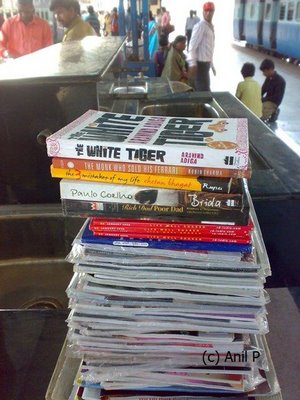
Buying a book or a magazine from the Higginbotham’s / Wheelers book store, sipping the coffee from the vendor who calls out to you whether you want coffee (as sweet as your wife ...), while you travel with the jolt as if your mother was trying you to put you to sleep, you will come across the best of the sights outside the chugging train. The sunrises and the sunsets, the fields and farms, kids playing out in the sun beating the heat and sometimes waving at you, the rivers and lakes, the bridges and the roads you see outside, the dhobi ghats and the small shops - all accompanied by the rhythmic beats of the travelling train. 
 

Have you not remembered to write to the friendly person who sat next to you in a long journey sometime in your life? Do you remember the office goers regularly meeting everyday in the train, the flower vendors, college students travelling back home, salesmen who sell pens and other utilities, poor kids trying to sell the packs of candies, those packets of peanuts, the blind man in the train singing songs with the beats of clattering wooden spoons in his hand. When we get down at the station, greetings are exchanged and promises are made to the co passengers being sure to write and addresses are noted down. I am sure letters are rarely written and mostly even the faces forgotten by the time you again board another train for another memorable journey.


Indian Railways...would narrate more stories than those can be made into movies which will touch your hearts...I am sure those who have used the Nilgris Express narrow Gauge train would have a different story to tell. Sadly thats the last narrow gauge steam locomotive, in India, still in use.

- vaazhka bhaaratham -